Harness
My personal plan-to-ship workflow for AI coding agents
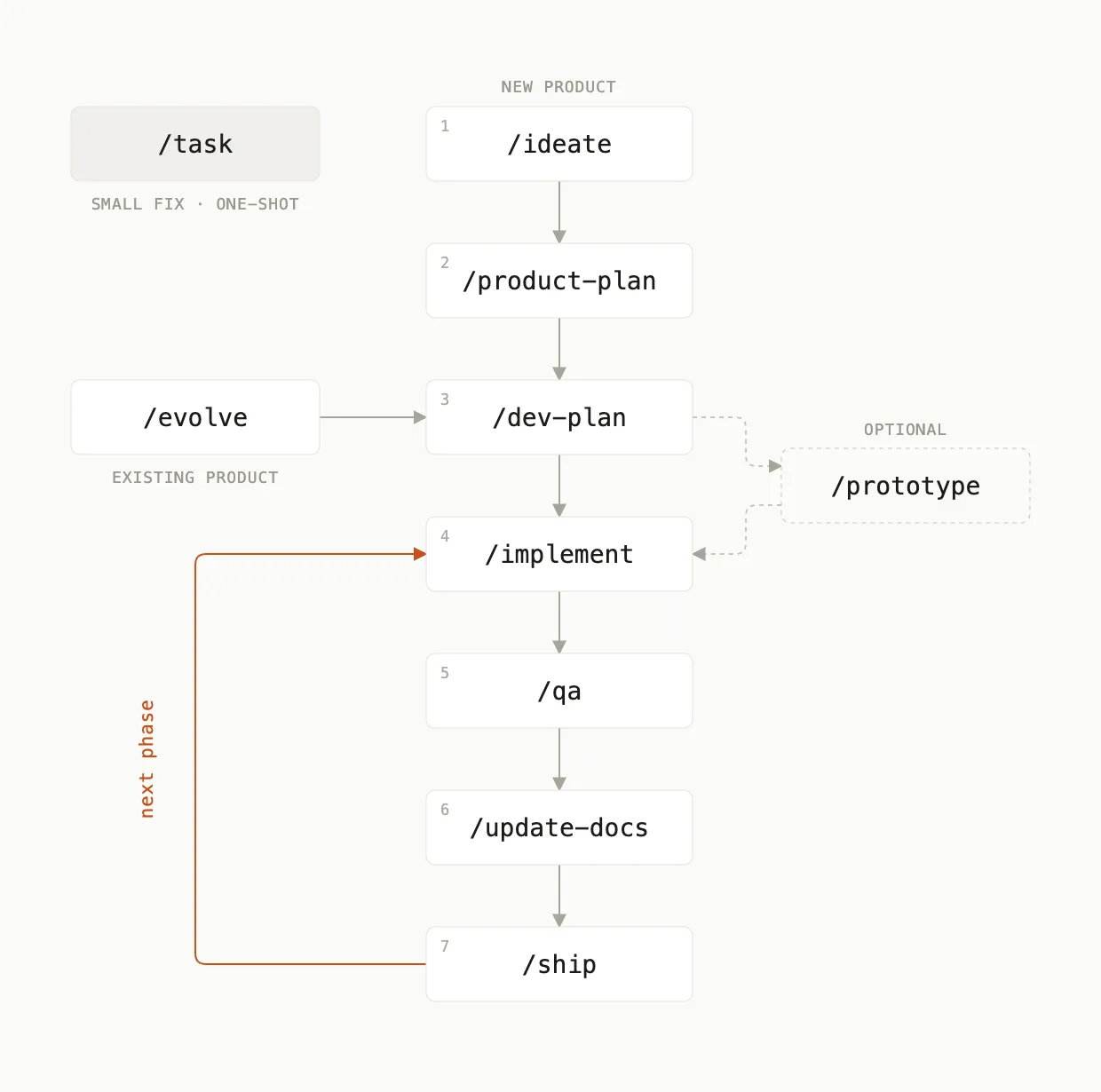
Clone it from GitHub ↗AI agents write code fast but wander without structure. Harness is the development workflow I use, packaged as Claude Code and Codex skills that take a project from idea to shipped. Each skill reads the documents the previous one wrote, so context carries across the whole chain instead of living in one long conversation.
Those documents live under .harness/ and are tracked in git as doctier-encrypted blobs: private in public repos, but still backed up, merged, and available in every worktree and clone.
Not everything starts from a blank idea. /evolve plans a feature on a product that already shipped, /task handles small fixes as one verified slice, /migrate-docs adopts the workflow on an existing repo (or a whole fleet of them), and /next-step recommends which skill comes next when you are not sure.
Install once and keep it in sync from the repo:
git clone [email protected]:RubenGlez/harness.git
cd harness && bash setup.sh
The setup script registers the plugin, subagents, and hooks in Claude Code, links the skills into Codex, and configures a terminal status line. It is personal tooling, shared as-is.
Ideate
/ideate researches the idea on the web, checks competitors and viability, and writes a go/no-go verdict into the project docs.
Plan
/product-plan interviews you on audience, features, and roadmap; /dev-plan turns that into architecture decisions and a spec for every must-have feature, with Given/When/Then acceptance criteria.
Implement
/implement classifies features as autonomous or needing human approval, then builds the phase as parallel vertical slices, one subagent per feature.
QA
/qa tests each acceptance criterion, fixes simple failures on the spot, and writes a report for anything bigger.
Ship
/update-docs syncs internal and public docs, then /ship runs pre-flight checks, bumps the version, tags, and deploys.